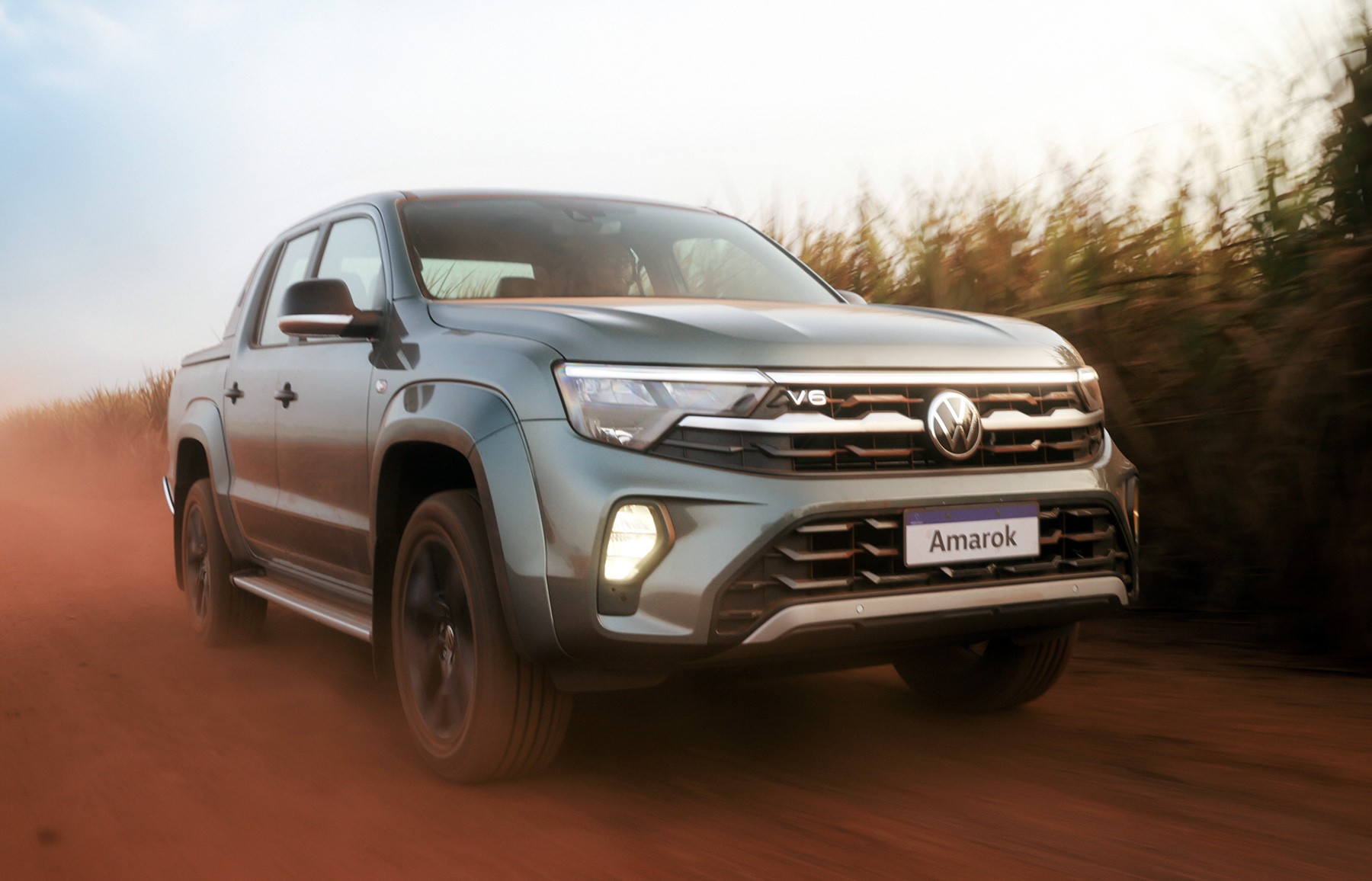
VW Amarok 2026: China's Growing Base in Latin American Auto Production
The automotive landscape in Latin America is undergoing a significant transformation, driven by evolving consumer demands and strategic global partnerships. At the forefront of this shift is Volkswagen, with its highly anticipated 2026 Amarok. This new generation pickup, poised for production in Argentina, represents more than just a model update; it symbolizes a deeper trend: the increasing reliance on a base chinesa América Latina for manufacturing platforms and technological innovation. While the immediate focus is on the Amarok's technical underpinnings, this development mirrors a broader expansion of Chinese influence across the region, touching everything from industrial collaboration to strategic infrastructure.
The Evolution of the VW Amarok: A Glimpse into 2026
For years, the Volkswagen Amarok has been a stalwart in the Latin American pickup market, known for its robust performance and utility. However, a recent minor facelift, introduced last August, left many enthusiasts wanting more. It appears this update was merely a prelude to something far more substantial. According to Mario Manrique, Secretary-General of SMATA, Argentina's automotive union, Volkswagen is gearing up for the production of an entirely new Amarok in 2026. This next-generation model, internally dubbed “Projeto Patagônia,” promises to be a game-changer, featuring both traditional combustion engines and advanced hybrid technology.
The move to integrate hybrid powertrains is a clear indicator of Volkswagen's commitment to modernization and environmental responsibility, aligning with global automotive trends. What makes this new Amarok truly pivotal, however, isn't just its greener footprint or its Argentine production base, but rather the foundation upon which it will be built. In a strategic pivot, Volkswagen is following a path increasingly trodden by its rivals: leveraging the technological prowess and manufacturing capabilities of a Chinese partner.
A New Foundation: The Maxus T90 as the Amarok's "Chinese Base"
The secret behind the new Amarok's anticipated advancements lies in its proposed Chinese origin for its foundational platform. Volkswagen is reportedly basing the 2026 Amarok on the Maxus T90 pickup, a product of SAIC, a Chinese automotive giant that has been a long-standing partner with VW in China since the 1980s. This isn't an isolated incident but rather a growing trend in the Latin American market. We’ve seen similar strategies with Fiat, which introduced the Titano—a rebadged Peugeot LandTrek that itself is based on the Chinese Changan Hunter. Chevrolet is also set to launch the Spark, an electric compact SUV manufactured in China by Baojun. These examples highlight a clear paradigm shift: rather than developing entirely new platforms from scratch, global automakers are finding efficiency and innovation in established Chinese designs.
The Maxus T90, first launched in 2021 and updated in 2024, brings a compelling package to the table. Produced by SAIC in China, the T90 is already a globally sold model. Its 2024 refresh introduced a significantly more aggressive and modern aesthetic, coupled with an interior that boasts luxurious finishes and cutting-edge technology, including dual interconnected screens dominating the dashboard. Size-wise, the T90 is a formidable contender, measuring 5.39 meters in length with a 3.15-meter wheelbase. This makes it larger and more robust than the current Amarok and even surpasses competitors like the Toyota Hilux and Chevrolet S10, only yielding in size to the Ford Ranger. This robust platform, combined with the potential for advanced hybrid systems—whether a mild hybrid or a more sophisticated plug-in variant—could offer Latin American consumers a highly competitive and technologically advanced pickup. It’s a win-win: VW gains speed to market and leverages proven technology, while consumers benefit from modern features and potentially more competitive pricing.
Beyond Auto Platforms: The Broader "Base Chinesa América Latina" Narrative
While the automotive sector clearly illustrates China's burgeoning industrial footprint, the concept of a base chinesa América Latina extends far beyond manufacturing platforms. China's strategic presence in the region encompasses investments in infrastructure, technology, and even raises geopolitical questions. A recent document from the US Congress, for instance, shed light on an alleged "unofficial Chinese military base" in Salvador, Bahia, Brazil. Dubbed the “Estação Terrestre de Tucano” (Tucano Ground Station), this facility is reportedly located at the Brazilian aerospace company Ayla Space, which maintains a partnership with Beijing Tianlian Space Technology—a Chinese firm specializing in satellite data analysis and terrestrial monitoring. The report, titled "Attracting Latin America to China's Orbit," flags potential security implications, suggesting the structure could be used by the Chinese government for surveillance or other strategic purposes.
This revelation underscores the multifaceted nature of China's engagement with Latin America. It's not just about selling cars or providing manufacturing platforms; it’s about establishing strategic footholds that can serve economic, technological, and potentially geopolitical objectives. The "base" here shifts from a physical manufacturing foundation to a broader sphere of influence, encompassing data infrastructure, space technology, and critical resource acquisition. This dual expansion – both industrial and strategic – paints a comprehensive picture of China's growing long-term commitment and presence in the region. For further reading on this, you might find US Congress Flags Alleged Chinese Base in Bahia, Raising Latin America Security Fears insightful.
Implications and Future Outlook: Navigating the Shifting Tides
The trend exemplified by the VW Amarok 2026 and the alleged Bahia ground station carries significant implications for Latin America. On the one hand, Chinese investment and technological collaboration bring undeniable benefits. They accelerate industrial modernization, foster job creation, and introduce advanced technologies like hybrid powertrains to a broader market. Consumers gain access to a wider array of products that are often more affordable and feature-rich. This influx of capital and expertise can stimulate economic growth and diversification within the region.
However, this growing reliance on a base chinesa América Latina also presents challenges and potential risks. Concerns about dependency, intellectual property, and geopolitical influence cannot be ignored. Governments and businesses in Latin America must carefully navigate these relationships to ensure long-term benefits without compromising sovereignty or local industry development. Key considerations include:
- Strategic Due Diligence: Thoroughly evaluating the long-term implications of partnerships, especially those involving critical infrastructure or sensitive technologies.
- Diversification of Partners: Avoiding over-reliance on a single foreign power by fostering relationships with multiple international stakeholders.
- Local Content Development: Negotiating agreements that include provisions for technology transfer, local content integration, and skill development to build indigenous capabilities.
- Transparency and Governance: Ensuring clear, transparent agreements and robust regulatory frameworks to prevent exploitation or undue influence.
The Amarok 2026 project, for example, could be a model for how to integrate Chinese platforms while maintaining brand identity and quality standards, but it also highlights the need for a balanced approach to industrial collaboration.
Conclusion
The impending launch of the VW Amarok 2026, built upon a Chinese platform, marks a significant milestone in the evolving automotive landscape of Latin America. It underscores the pragmatic shift by global manufacturers towards leveraging the innovation and efficiency offered by Chinese partners. This industrial integration, however, is but one facet of a much larger narrative concerning China's expanding footprint across the continent. From auto production lines to alleged strategic installations, the deepening presence of a base chinesa América Latina is a complex, multifaceted phenomenon that demands careful consideration. As the region continues to develop, understanding and strategically managing these relationships will be crucial for fostering sustainable growth, technological advancement, and maintaining geopolitical balance.