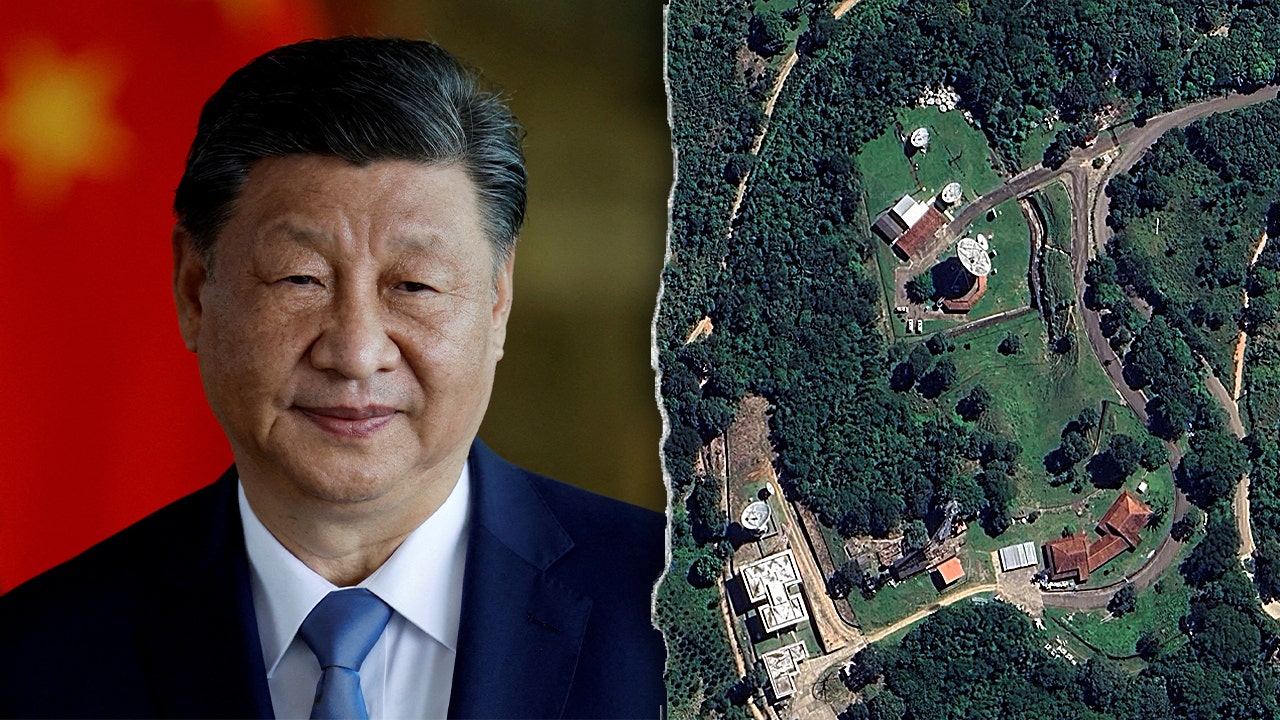
China's Expanding Footprint: From Auto Platforms to Alleged Bases in Latin America
Latin America has long been a region of strategic importance, attracting global powers seeking economic partnerships, natural resources, and geopolitical influence. In recent decades, China has emerged as a dominant player, steadily expanding its presence across the continent. This multifaceted expansion, often characterized by a blend of economic opportunity and strategic maneuvering, ranges from deep integration into the automotive industry's supply chains to more contentious claims of potential military or dual-use facilities. This article delves into the complex and rapidly evolving nature of China's engagement, exploring both its undeniable economic footprint, such as in the automotive sector, and the more contentious claims of a potential base chinesa américa latina, particularly regarding alleged intelligence-gathering facilities.
China's Automotive Engine in Latin America: A Strategic Partnership
The automotive industry in Latin America is undergoing a significant transformation, with Chinese technology and manufacturing prowess playing an increasingly pivotal role. Traditional Western automakers, facing pressures to innovate, cut costs, and expedite new model development, are increasingly turning to Chinese allies. This strategy allows them to leverage established platforms, robust supply chains, and advanced electrification capabilities, rapidly bringing competitive vehicles to market.
The Volkswagen Amarok 2026 and the Maxus T90 Blueprint
A prime example of this trend is the upcoming Volkswagen Amarok 2026. For years, the Amarok, sold in markets like Brazil since 2010, received only minor updates, leaving many consumers underwhelmed. However, a significant overhaul is on the horizon. According to Mario Manrique, Secretary-General of SMATA (an Argentine automotive industry union), Volkswagen is set to produce a new-generation Amarok in Argentina by 2026, internally known as "Project Patagonia." This new pickup will feature hybrid technology alongside traditional combustion engines, signaling a move towards more sustainable mobility.
Crucially, to develop this next-gen Amarok, Volkswagen is reportedly adopting a strategy already embraced by rivals: basing the vehicle on a Chinese platform. Specifically, the new Amarok is expected to utilize the robust foundation of the Maxus T90 pickup. Maxus is a sub-brand of SAIC, a long-standing partner of Volkswagen in China since the 1980s. This partnership is not just about badge engineering; it represents a deeper integration of design, engineering, and manufacturing capabilities.
This approach mirrors that of other major players. Fiat, for instance, introduced the Titano in Brazil, which is based on the Peugeot LandTrek, itself a version of the Chinese Changan Hunter pickup. Similarly, Chevrolet is set to launch the Spark, an electric compact SUV produced in China by Baojun. These examples highlight a clear trend: Chinese automotive expertise is becoming the VW Amarok 2026: China's Growing Base in Latin American Auto Production for many new vehicles destined for Latin American consumers.
The Maxus T90, originally launched in 2021 and globally distributed, is manufactured by SAIC in China. It is a larger and more robust vehicle than the current Amarok, boasting a length of 5.39 meters and a wheelbase of 3.15 meters. It even surpasses the Toyota Hilux and Chevrolet S10 in size, only being slightly smaller than the Ford Ranger. Recent updates to the T90 in 2024 have further enhanced its appeal, introducing a more aggressive exterior, a new interior with a luxurious finish, and advanced technology, including interconnected dual screens on the dashboard. The prospect of a hybrid variant for the Amarok, though details are still emerging on whether it will be a mild-hybrid or a more sophisticated plug-in system, promises improved fuel efficiency and reduced emissions, appealing to a growing segment of environmentally conscious consumers.
Insight: This trend offers several advantages for Western automakers, including reduced R&D costs, faster time-to-market, and access to advanced manufacturing techniques honed in China's competitive market. For Latin American consumers, it means access to newer, more technologically advanced, and often more feature-rich vehicles at competitive prices.
Beyond Commerce: Unpacking the Allegations of a Chinese Base in Latin America
While economic partnerships flourish, a different narrative concerning China's presence in Latin America has emerged, raising significant geopolitical questions. A document from the United States Congress, released in late 2023, brought Salvador, Bahia, Brazil, into the spotlight of international security concerns. The report, prepared by a committee tasked with monitoring China's activities, alleges the existence of a clandestine Chinese military or dual-use facility operating in the Brazilian capital of Bahia.
The "Tucano Ground Station" in Bahia: A Point of Contention
Dubbed the "Tucano Ground Station," this alleged structure is reportedly located at the headquarters of the Brazilian aerospace company Ayla Space. The alarm bells were triggered by Ayla Space's partnership with Beijing Tianlian Space Technology, a Chinese firm specializing in satellite data analysis and terrestrial monitoring. The US congressional document, titled "Luring Latin America into China's Orbit," explicitly labels the Salvador installation as "unofficial."
According to the report, such an installation could provide the Chinese government with capabilities far beyond mere commercial operations. While precise details remain classified, the general scope of such facilities often includes:
- Satellite Data Analysis: Processing and interpreting data from Chinese satellites, potentially including imagery and signals intelligence.
- Terrestrial Monitoring: Covert surveillance of ground activities, communications, and infrastructure.
- Intelligence Gathering: Collecting information relevant to China's strategic interests in the region.
- Dual-Use Potential: A facility designed for civilian scientific research or commercial purposes could easily be repurposed or augmented for military or intelligence-related operations.
The implications of an alleged base chinesa américa latina like the "Tucano Ground Station" are profound. It suggests a deeper, more strategic projection of Chinese power into the Western Hemisphere, potentially challenging regional security and the sovereignty of Latin American nations. The secrecy surrounding the alleged facility further amplifies concerns, drawing parallels with China's broader global strategy of establishing a network of military and dual-use outposts to support its expanding geopolitical ambitions. This is a critical development, as highlighted in a related analysis: US Congress Flags Alleged Chinese Base in Bahia, Raising Latin America Security Fears.
The Dual Narrative: Economic Integration vs. Geopolitical Concerns
These two narratives—overt economic cooperation in industries like automotive and covert allegations of strategic outposts—underscore the complex nature of China's expanding footprint in Latin America. China consistently promotes its "win-win" economic partnerships, emphasizing mutual development, infrastructure investment, and technological transfer. Indeed, China has become a major trading partner and investor for many countries in the region, bringing much-needed capital and market access.
However, the allegations of facilities like the "Tucano Ground Station" introduce a significant layer of geopolitical complexity. They force Latin American nations to weigh the undeniable economic benefits against potential risks to their sovereignty, national security, and long-term strategic autonomy. The concept of a "dual-use" facility is particularly challenging, as it blurs the lines between legitimate commercial or scientific endeavors and potential military or intelligence applications. The mere existence of such allegations, regardless of their verification status, puts pressure on Latin American governments to increase transparency and scrutiny of foreign investments, particularly those involving advanced technologies or strategically important locations.
Practical Tips for Latin American Nations:
- Diversify Partnerships: While engaging with China offers significant benefits, it's crucial to avoid over-reliance on a single foreign power. Actively seek diverse economic and strategic partners to maintain leverage and autonomy.
- Strengthen Due Diligence: Implement rigorous screening processes for foreign investments, especially in sensitive sectors like aerospace, telecommunications, and infrastructure, to identify and mitigate potential security risks.
- Demand Transparency: Insist on clear, open, and verifiable agreements for all projects, particularly those involving technologies with dual-use potential.
- Enhance Cyber Security: Invest in robust cybersecurity infrastructure and protocols to protect critical national data and systems from potential espionage or interference.
Implications for Regional Sovereignty and International Relations
The growing Chinese presence in Latin America, whether economic or strategic, has significant implications for regional sovereignty and international relations. It challenges the traditional dominance of the United States in the Western Hemisphere, fostering a more multipolar global landscape. For Latin American nations, this shift presents both opportunities and dilemmas. They can leverage increased competition among global powers to secure better deals and diversify their international relations. However, it also requires them to navigate complex geopolitical currents, balancing economic aspirations with the imperative to protect their national interests and maintain regional stability.
The US, in turn, is closely monitoring China's activities, viewing its expanding influence as a potential threat to its own security interests and regional stability. This competition for influence is likely to intensify, with both powers vying for economic, political, and strategic allegiances in Latin America. The challenge for nations in the region will be to forge their own paths, pursuing independent foreign policies that prioritize national development and sovereignty, while judiciously engaging with all major global players.
Conclusion
China's expanding footprint in Latin America is a complex tapestry woven with threads of economic partnership, technological exchange, and emerging geopolitical concerns. From its pivotal role in shaping the next generation of vehicles like the Volkswagen Amarok to the unsettling allegations of covert intelligence facilities, China's influence is undeniable and growing. Whether manifested as a manufacturing hub or an alleged strategic outpost, the concept of a base chinesa américa latina demands careful attention and strategic foresight from all stakeholders. Latin American nations stand at a critical juncture, tasked with harnessing the benefits of Chinese engagement while vigilantly safeguarding their sovereignty and navigating an increasingly intricate global power dynamic. The coming years will undoubtedly reveal the full extent and long-term implications of this profound transformation.